British Airways x BCCJ Sustainability Roundtable
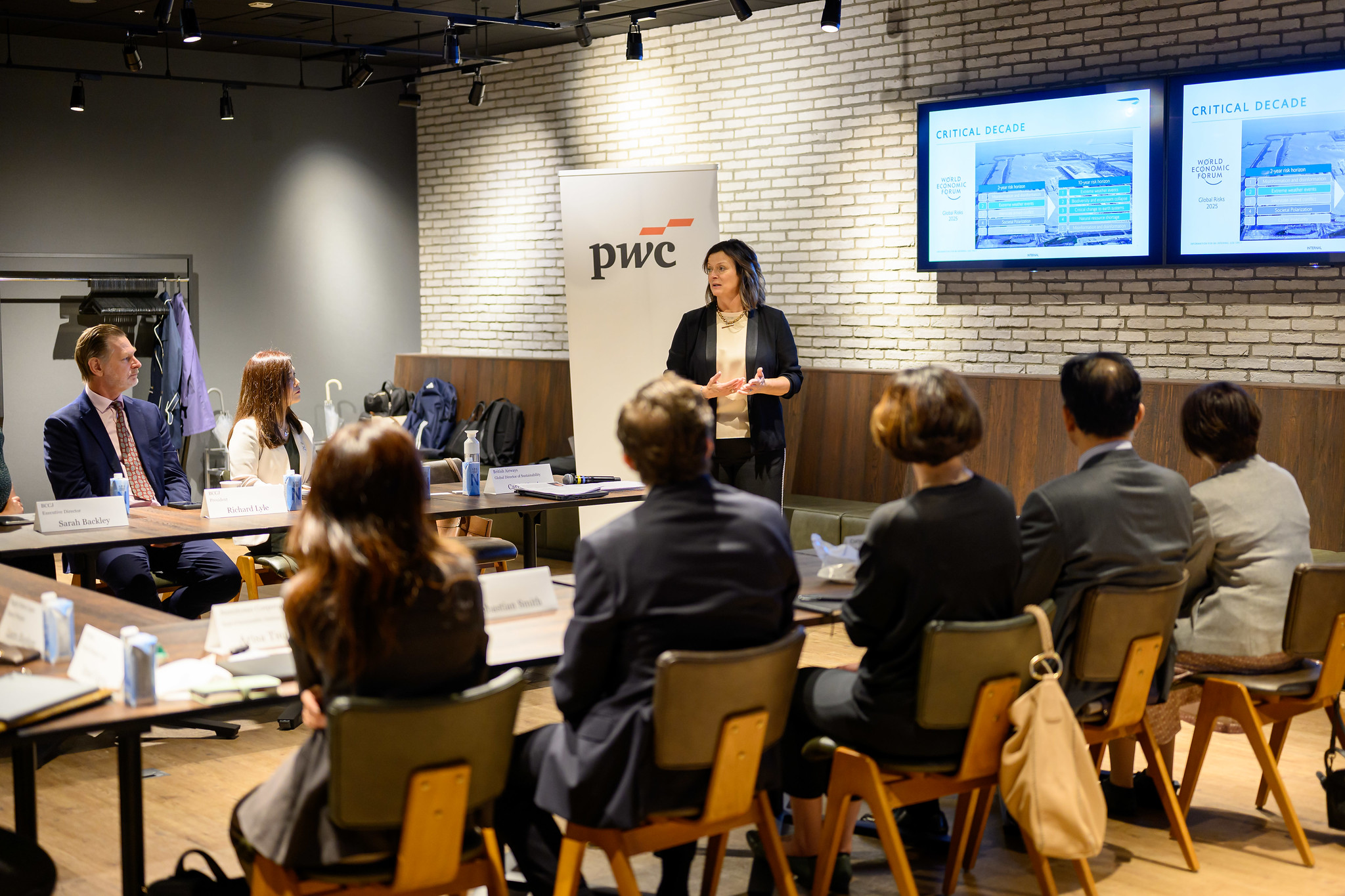
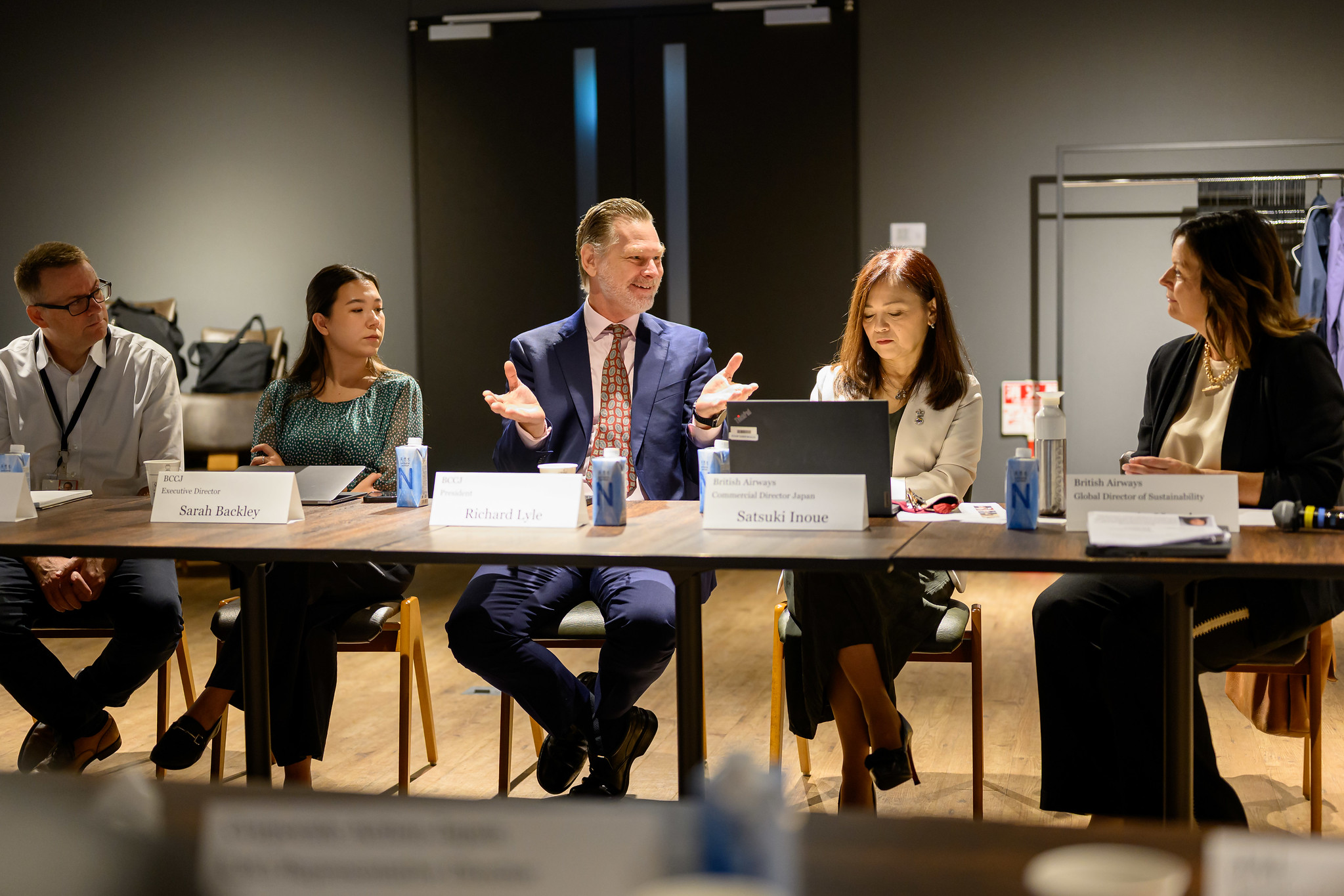
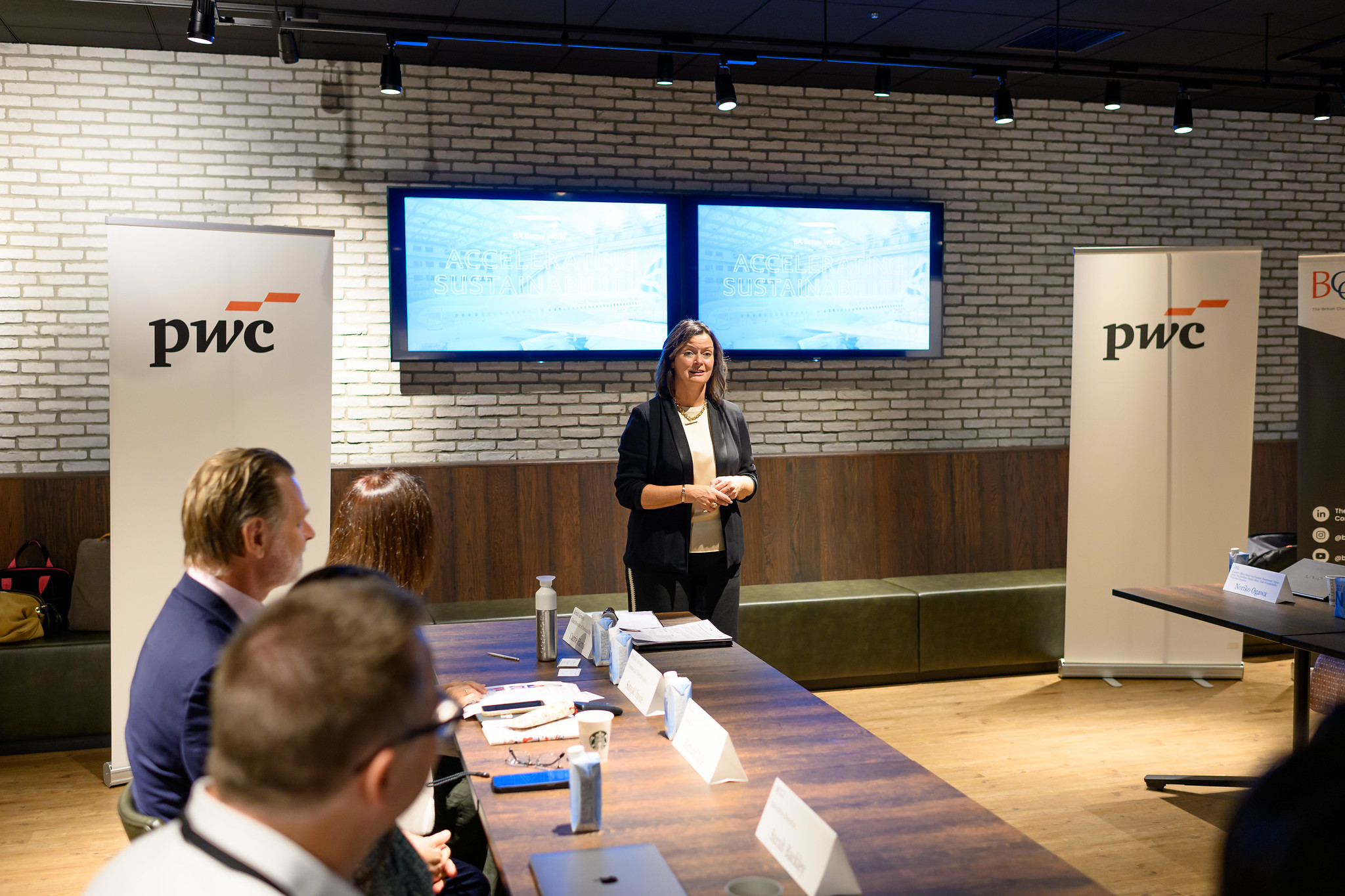
On her recent visit to Tokyo, London-based Carrie Harris, Director of Sustainability at British Airways, chaired a sustainability roundtable hosted at PwC Japan and organised by the British Chamber of Commerce in Japan. The high-level event brought together senior leaders from across industries for an in-depth dialogue on BA’s journey toward net zero carbon emissions.
Harris began by outlining the two-year, £7 billion investment that British Airways is undergoing. Launched in 2024, the programme comprises more than 1000 modernisation initiatives, including a new website and mobile app, new short-haul seats, new and updated lounges, more destinations, as well as updates to technology systems and greater adoption of AI. By investing in “every part of the business,” British Airways ’s transformation programme will ensure the business is positioned for long term success including on sustainability, she said.
Path to net zero
Sustainability is a core element of British Airways ’s investment, given the growing urgency for companies to curb their negative environmental impacts, she added, pointing to the World Economic Forum’s Global Risks Report 2025 that shows the top four risks for businesses in a ten-year horizon relate to the climate crisis and pressure on natural systems.
Responsible operations are therefore “not just a moral, social or environmental rationale, but a business rationale, too,” she explained. “To secure viability of our business … to secure our right to operate and continue to grow, we have to deal with the fact we’re reliant on fossil fuels and need to transition away from that.”
The transition, however, is particularly challenging for aviation due to two reasons: the lack of decarbonisation solutions available now and the ongoing growth of the sector as more people fly. Still, British Airways is committed to reach net zero carbon emissions by 2050 as part of the BA Better World sustainability programme, she continued.
The programme aims to minimise British Airways ’s impact on the planet and maximise its contribution to society through a three-part strategy covering people, planet and responsible business. Within the Planet pillar three principal actions will deliver their net zero carbon goal: investing in more fuel-efficient aircraft and operations, increasing the use of sustainable aviation fuels (SAF) and purchasing high quality carbon removals credit to neutralise residual emissions.
Fuel-efficient aircraft
BA is investing in new, modern aircraft that are 20–35% more efficient than the aircraft they replace, while also reducing emissions by making changes to the way its airplanes fly.
The airline also supports the innovation to enable “true zero emissions,” for aviation in the longer time fame beyond 2050, or potentially sooner for some short routes. Through its investment in innovators such as ZeroAvia, who are working to decarbonise commercial aviation using hydrogen fuel cell propulsion and potentially liquid hydrogen for larger aircraft, British Airways are supporting innovators to bring fresh thinking to the sector and help accelerate the traditional timeframes of aviation technology development.
Sustainable Aviation Fuels
Although SAFs produce almost the same level of carbon dioxide as conventional aviation fuels at the point of use, the carbon dioxide generated is already part of the short term atmospheric carbon cycle rather than being drawn from fossil fuel. This means that, although emissions still remain, emission reductions from the use of SAF of 65% or more, are measured as the reduction of carbon emissions on a greenhouse gas lifecycle basis, compared with the fossil jet fuels it replaces.
Often categorised as synthetic aviation fuels, aviation biofuels or recycled carbon aviation fuels, among others, SAF can be used in any aircraft without the need for modification, making it the readiest solution to reduce the carbon emissions associated with aviation, said Harris. Thanks to the leadership of the fuels team in IAG, British Airways has been investing in SAF for around 10 years and routinely using it in its operations since 2021. In 2024, SAF accounted for 2.7% of the airline’s total fuel use, believed to be more than double that of other global airlines.
“The amount of SAF we’ve used in the past four years has avoided about 1 million tonnes of CO2 being produced versus a fossil fuel alternative. We’re making good inroads, but we need to scale that up,” she added.
One challenge is the high cost of producing SAF and the large investments required to build SAF production plants. Still, the UK’s Sustainable Aviation Fuel Mandate requires 10% of jet fuel to be SAF by 2030 rising to 22% by 2040, which is driving development related to SAF. British Airways’ corporate customers are particularly keen to support SAF, including by purchasing SAF credits from the airline, because doing so can help them move towards their own environmental targets, mitigating their travel ‘scope 3’ emissions, Harris explained.
In September, British Airways—as part of oneworld Alliance and in partnership with Breakthrough Energy Ventures—launched a new investment fund designed to address the limited availability and high cost of today’s SAF. The fund seeks to accelerate the global development of long-term aviation fuel solutions that are cost-effective, scalable and have lower emissions than do conventional fuels.
In Japan, meanwhile, with no government mandate, SAF use remains up to each airline. Panellists noted that SAF is two to three times more expensive than conventional aviation fuel, which acts as a barrier to using SAF despite government incentives to do so. However, a public-private sector taskforce to promote SAF and the opening of the country’s first large-scale domestic SAF production unit in Osaka in 2024, which started supplying SAF this year, could drive greater use of the fuel.

Carbon removals
Harris introduced British Airways’s plan, launched in 2024, to help mobilise the scaling of the greenhouse gas removals (GGR) sector, as it became the largest purchaser of carbon removals in the UK and the largest airline purchaser globally. The portfolio features more than 10 types of carbon removal approaches ranging from storing carbon in trees and soils, to enhanced rock weathering and to capturing carbon dioxide from the air and storing it underground.
“Governments recognise that we have to take carbon out of the atmosphere, but this is a nascent sector that is not yet well understood, despite the economic growth and jobs potential being very significant. At British Airways, we realised there was not enough investment in the sector and we needed to act. Putting our brand behind carbon removals has had an effect already,” she said, pointing to the launch of the UK government’s Jet Zero Taskforce GGR activity in 2025.
British Airways has also partnered with The Earthshot Prize, which spotlights and scales innovative climate solutions across the globe, including SAF and carbon removals. It has also purchased a number of carbon removal credits from leading direct air capture companies Climeworks, which operates the world’s two largest Direct Air Capture plants in Iceland, and 1PointFive developing a commercial plant in Texas.
Q&A
Asked about the use of surcharges for SAF or carbon removals, Harris said British Airways has instead embedded all such sustainability measures as a cost of doing business while striving to “build awareness among customers on how to take action” on climate change.
Of all the factors driving environmental change in aviation, she cited the finance and insurance sectors as particularly important, both now and in the next decade, as they can provide the necessary capital and incentives for the industry’s increased sustainability.
In closing, Harris said British Airway’s approach to sustainability and net zero carbon emissions is only possible thanks to the buy-in from the entire organisation, including the chief executive and wider management team and called on other companies to remain active and vocal on sharing their progress.
“If companies aren’t embracing net zero, they’re unlikely to be the companies that succeed in the future. Climate change isn’t going away—it’s accelerating—and we have to address it,” she said.